Why New-Car Sales Alone Cannot Predict Automotive Repair Tool Demand
Discover why existing vehicle fleets, repair applications, compatibility and workshop channels matter when sourcing professional automotive specialty tools.
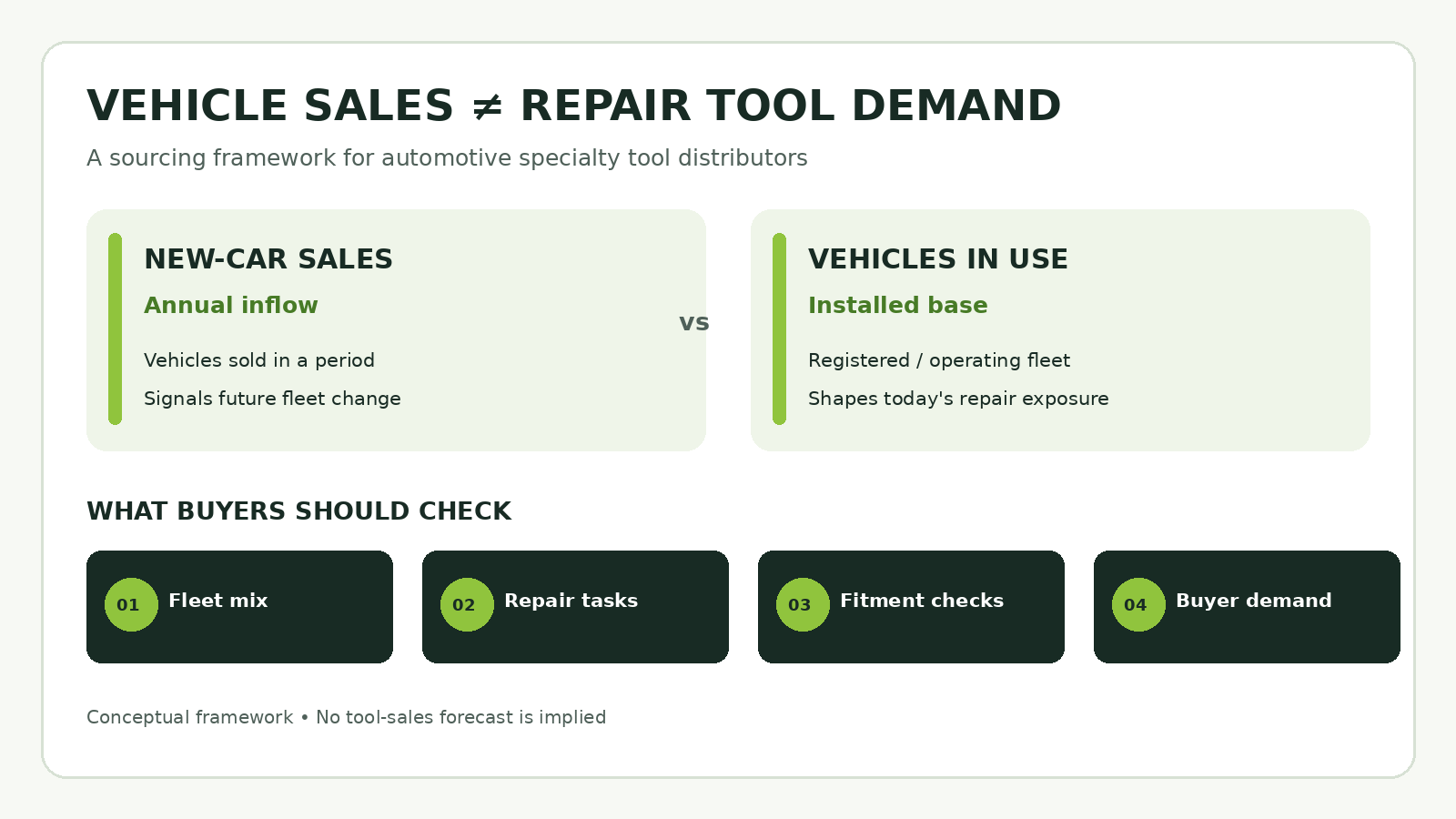
New-car sales indicate the flow of vehicles entering a market. They do not measure the repair work happening in workshops today. Importers and tool distributors need to consider the vehicles already on the road, fleet age, vehicle systems, repair procedures and channel demand before deciding which automotive specialty tools to stock.
Why are vehicle sales and vehicle fleets different?
The distinction is between a flow and a stock. New-car sales count vehicles sold over a period; the vehicle fleet describes vehicles registered or in use at a point in time. For example, the U.S. Federal Highway Administration reports 297,525,836 registered motor vehicles for 2024, including trucks, motorcycles, buses and automobiles—not just passenger cars. That is an installed-base reference, not a count of repair jobs or tool purchases.
Europe offers another perspective. ACEA's Vehicles on European Roads 2026 report states that 256 million passenger cars were on EU roads in 2024 and electrically chargeable passenger cars represented 3.7%. These data should not be compared directly with U.S. totals covering several vehicle classes.
Does growth in EV sales eliminate demand for conventional repair tools?
No conclusion of that kind follows from sales alone. The IEA's Global EV Outlook 2026 indicates that electric cars accounted for about 25% of global new-car sales in 2025, but about 5% of the global car stock. The exact vehicle mix differs by country, so distributors should inspect fleet composition and repair tasks by market rather than extrapolating one global ratio into a local purchasing forecast.
How should buyers translate fleet information into tool assortment decisions?
- Identify vehicle classes and powertrains serviced by target customers.
- Map repair procedures to tool categories, such as engine timing, brake service, bearing/puller, cooling and injector work.
- Confirm precise fitment, including vehicle model, model year, engine code, repair procedure and actual kit contents. A familiar brand or engine-family name is insufficient evidence.
- Check the distribution channel. Tool brands, repair chains and wholesalers may need different packaging, documentation, quantities and supply terms.
- Reconcile market context with direct demand evidence such as genuine inquiries, replenishment orders, usage patterns and customer feedback.
What does aftermarket growth tell us—and what does it not tell us?
Auto Care Association and MEMA Aftermarket Suppliers projected 5.2% U.S. light-duty automotive aftermarket growth in 2026, covering non-warranty parts, fluids and service labor. This is not a growth forecast for specialty repair-tool sales. Buyers should avoid treating broad aftermarket growth as a purchasing forecast for any particular toolkit.
What should importers request from an automotive specialty tool supplier?
Ask for authentic item photographs, confirmed component lists, product dimensions and technical specifications, application and engine-code evidence, packaging options and a documented sample-approval procedure. For each VIKTEC model, availability, lead time, fitment and customization feasibility require item-level confirmation.
VIKTEC TOOL SOLUTIONS (Ningbo Dicong Machinery Co., Ltd.) provides automotive specialty tool and OEM/ODM sourcing solutions for tool brands, importers and distributors. This article offers a purchasing framework; it is not a claim that any particular product fits an unverified vehicle application.
FAQ
Does a larger vehicle fleet guarantee more tool sales? No. Fleet size indicates potential service exposure, not workshop job frequency, tool replacement rates or distributor purchases.
Can one timing tool kit fit every vehicle under the same brand? No. Verify the exact application, engine code, model year, service instructions and kit component requirements.
Should an EV sales headline determine the entire assortment? No. Examine the operating fleet, actual service demand and verified repair procedures in each target market.
Next step for sourcing teams
Share your target vehicle and engine applications, markets, quantities, branding and packaging requirements. VIKTEC can help evaluate candidate tool categories, subject to technical and commercial confirmation.
Sources and evidence limitations
- U.S. FHWA, State Motor-Vehicle Registrations — 2024, Table MV-1, published January 2026: https://www.fhwa.dot.gov/policyinformation/statistics/2024/mv1.cfm
- ACEA, Vehicles on European Roads 2026, January 15, 2026; EU 2024 data baseline: https://www.acea.auto/publication/report-vehicles-on-european-roads-2026/
- IEA, Global EV Outlook 2026, Trends in Electric Cars, May 20, 2026: https://www.iea.org/reports/global-ev-outlook-2026/trends-in-electric-cars
- Auto Care Association & MEMA Aftermarket Suppliers, June 11, 2026 forecast: https://www.autocare.org/news/latest-news/details/2026/06/11/u.s.-light-vehicle-automotive-aftermarket-expected-to-grow-5.2--in-2026
Evidence limits: No source measures VIKTEC specialty tool sales, specific confirmed buyer procurement intentions, product-level fitment or future deliveries.
Repair applications
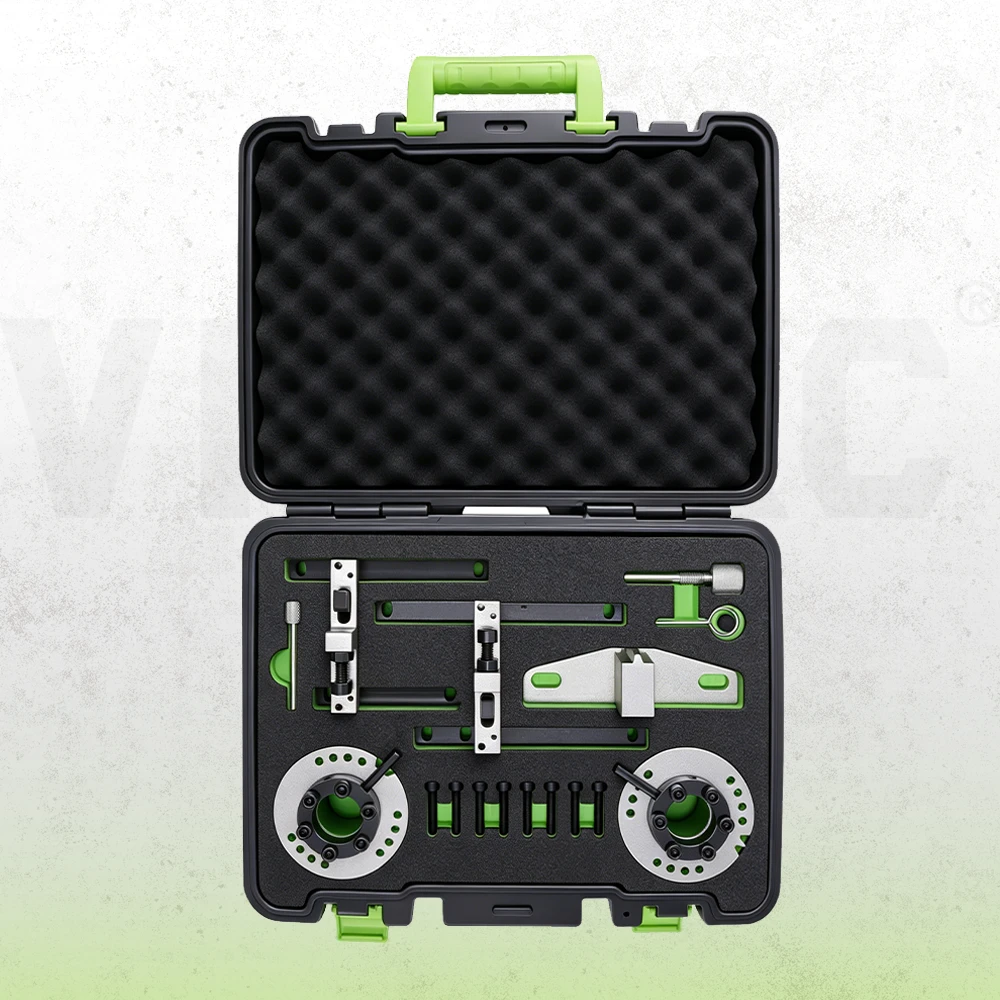 Engine timing serviceSelect by drive type and repair scope.
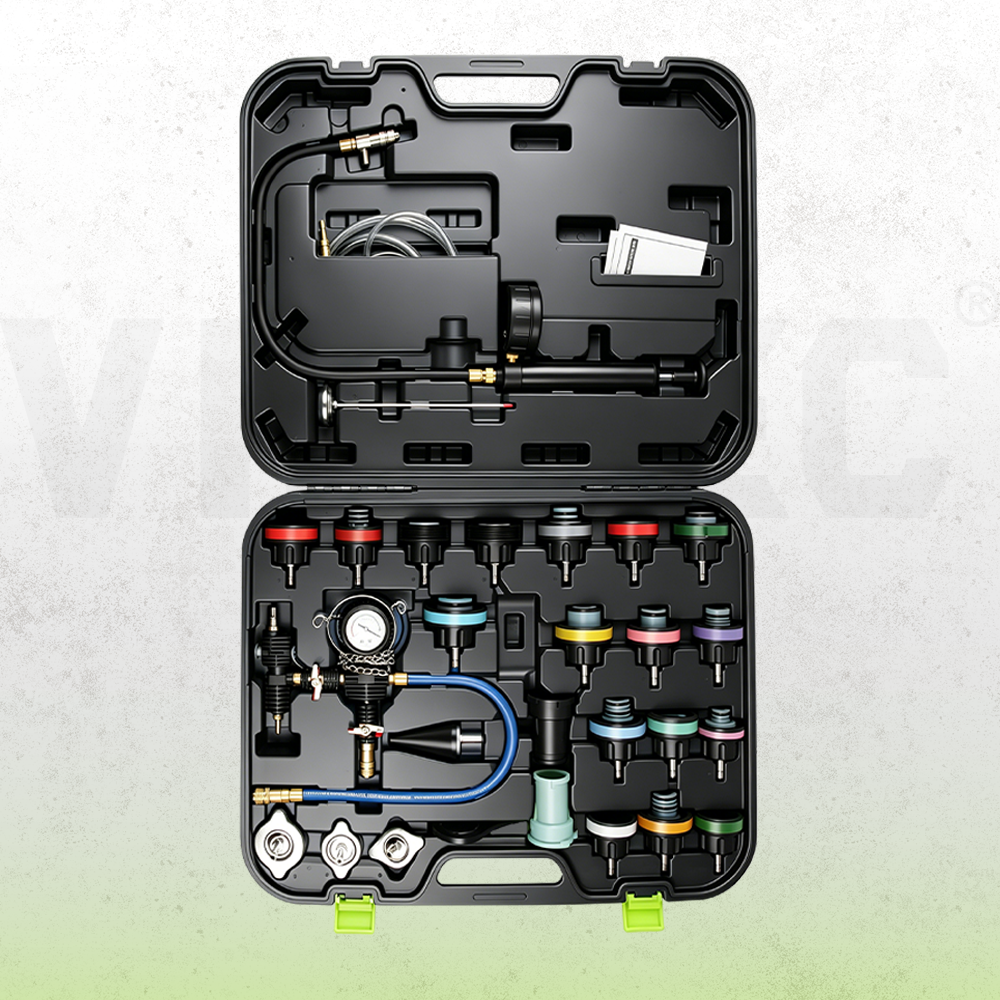 Cooling system serviceDefine the cooling service before sourcing tools.
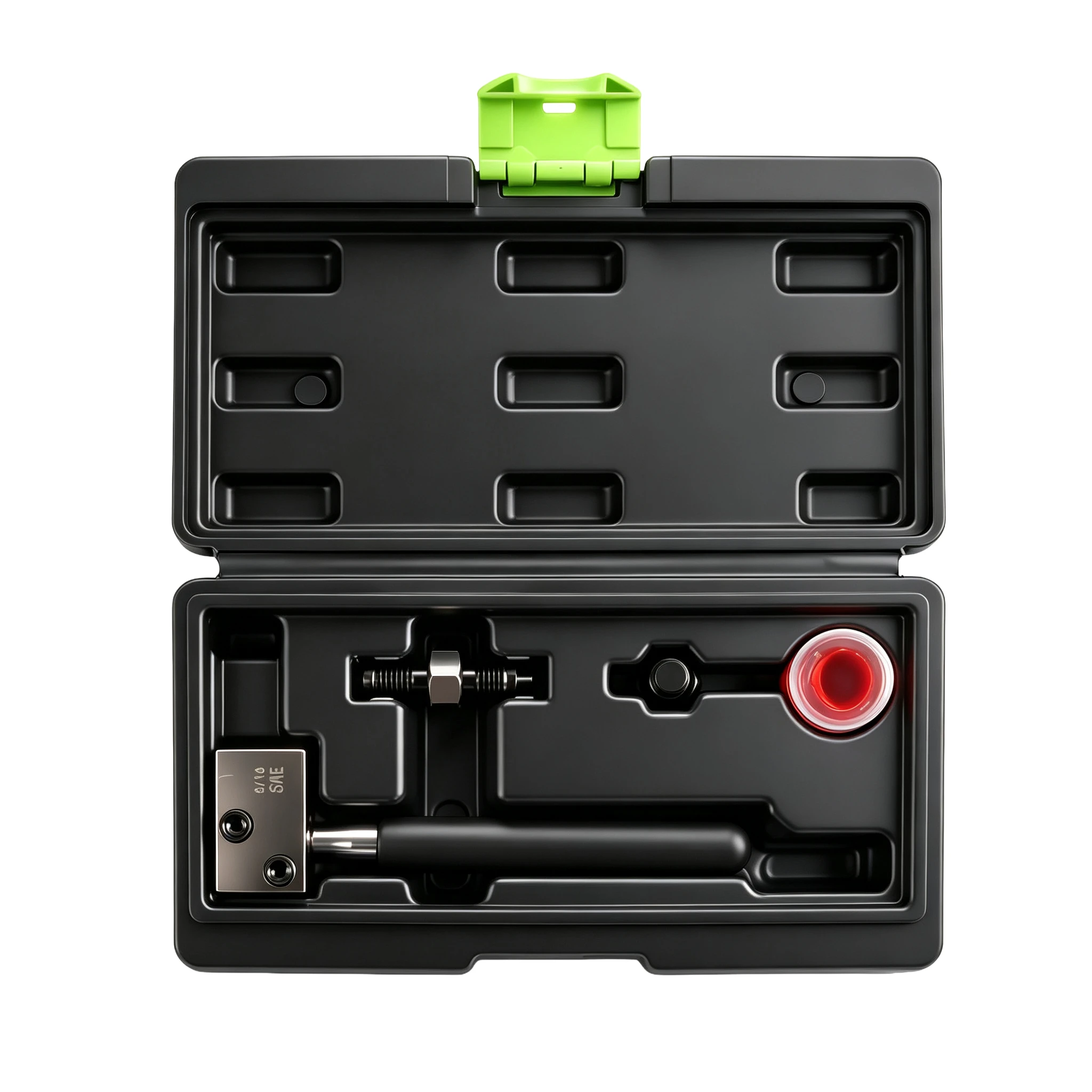 Brake pipe flaringSelect an on-car or bench tool for the pipe and flare you need.
Related products
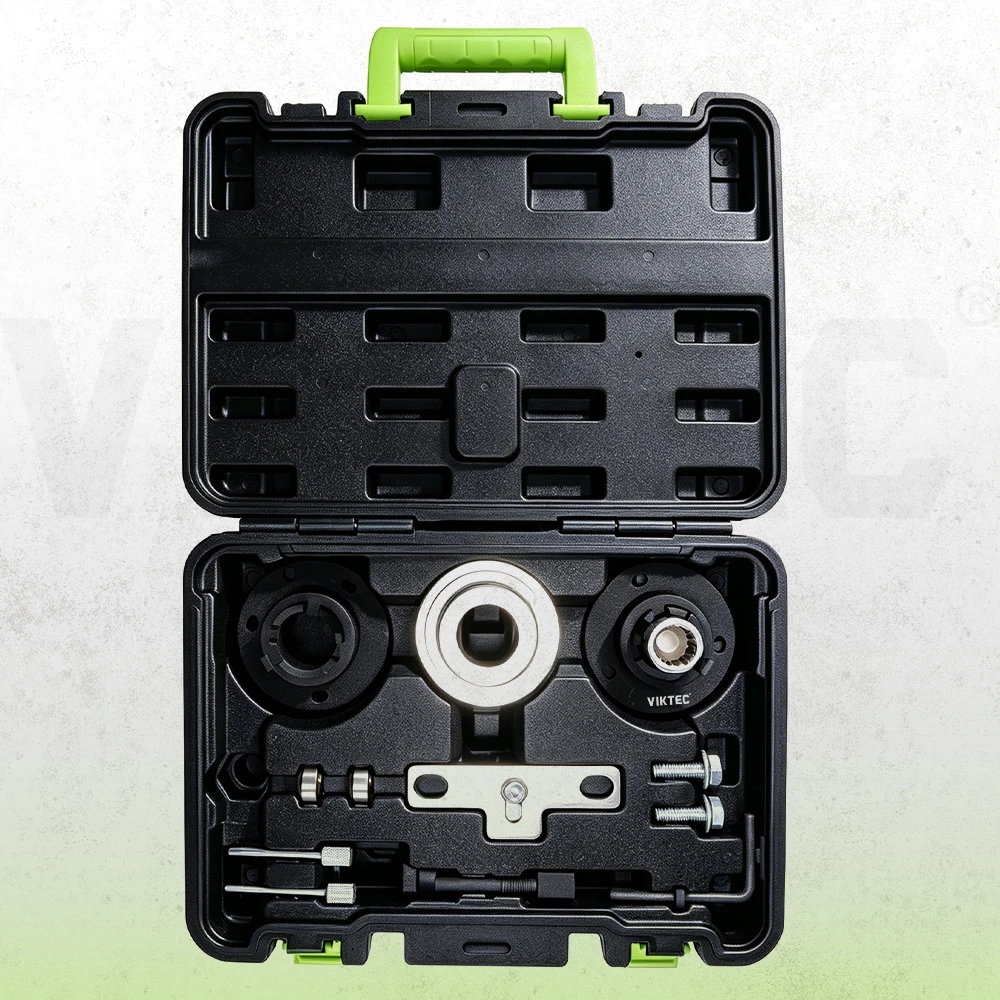 VT18743 · Ford 1.0L EcoBoost Chain Engine Timing Tool SetVT18743 supports timing-chain service on selected Ford 1.0L EcoBoost engines. Published engine-code examples include B3DA and B7DA; confirm the exact vehicle, year, market and repair task against the current kit contents and service specification before selecting it.VT01064C · 28PC Cooling System Pressure Tester And Vacuum Refill KitVT01064C is a 28-piece cooling-system pressure-testing and vacuum-refill kit. Confirm the vehicle connection, radiator-cap adapter and service procedure for the intended test or refill task. The published gauge scale is 0–35 psi (0–2.5 bar); follow the vehicle-specific service limits.VT13995 · 4.75 mm (3/16 in) SAE Double Flaring Tool for Brake LinesVT13995 forms SAE double flares on 4.75 mm (3/16 in) brake line. Check the specified tubing material, fitting and flare profile before selecting the tool. Matching diameter alone does not confirm suitability for another flare type or repair procedure.